 Image 1 of 11
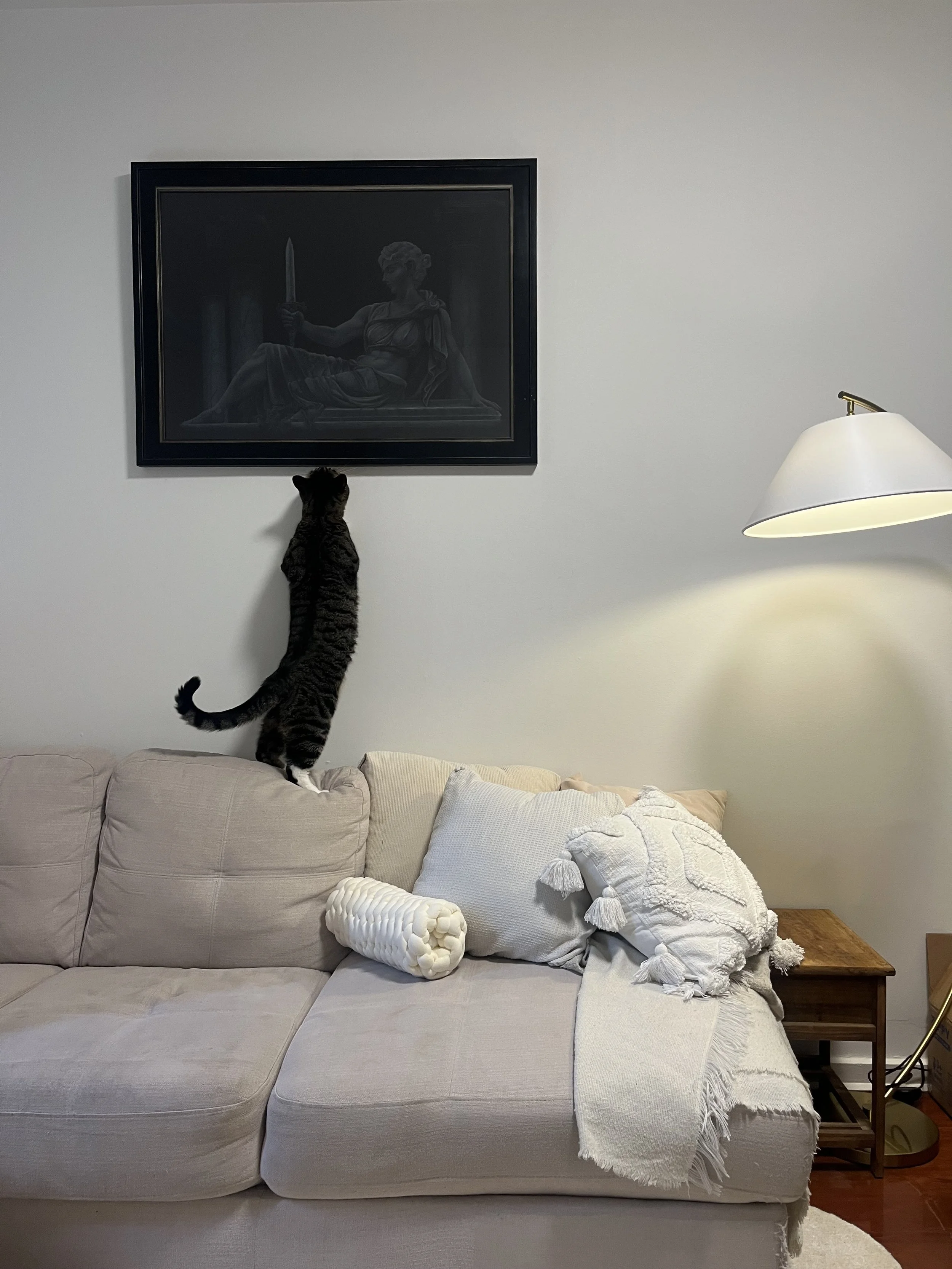 Image 2 of 11
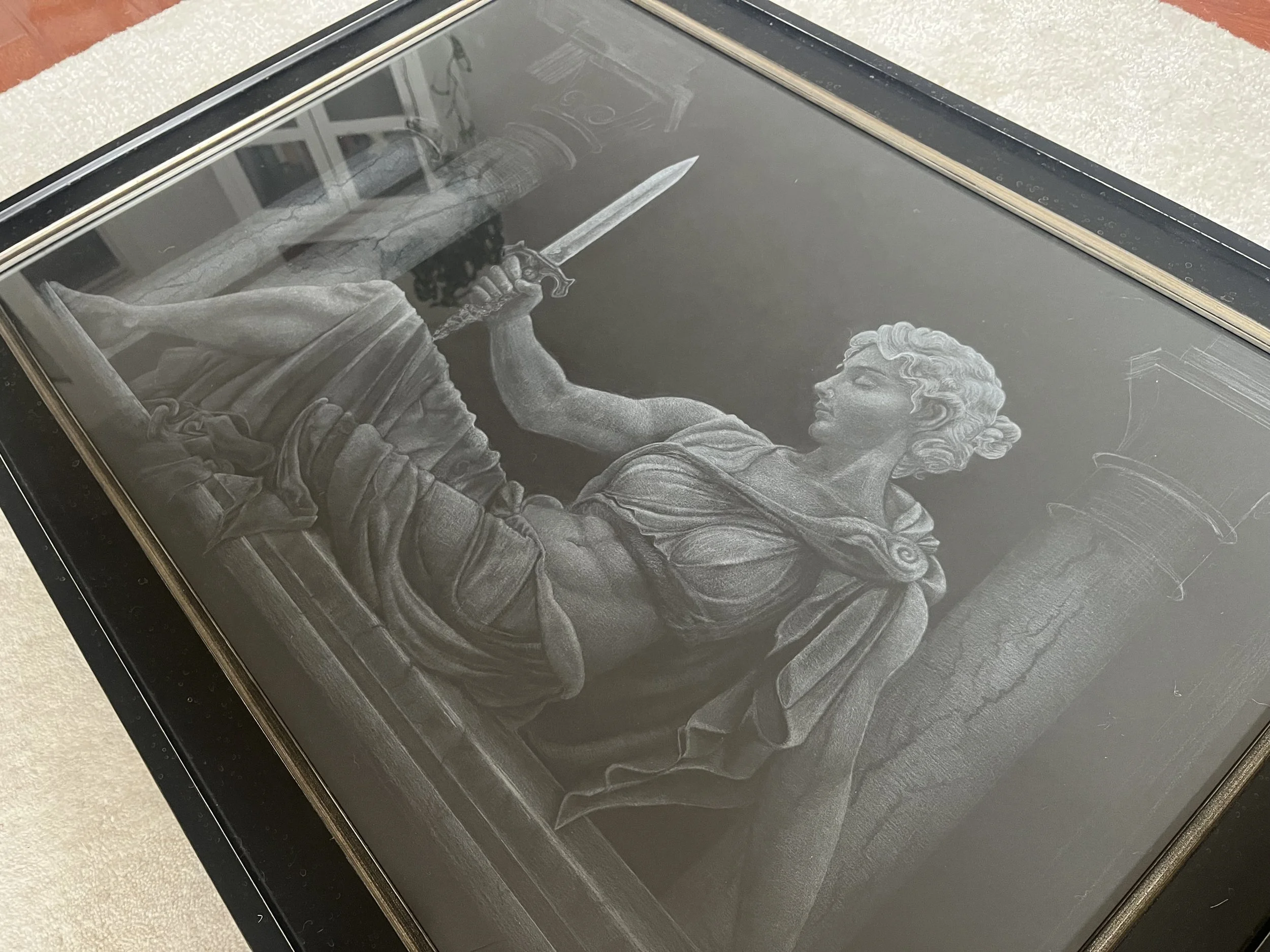 Image 3 of 11
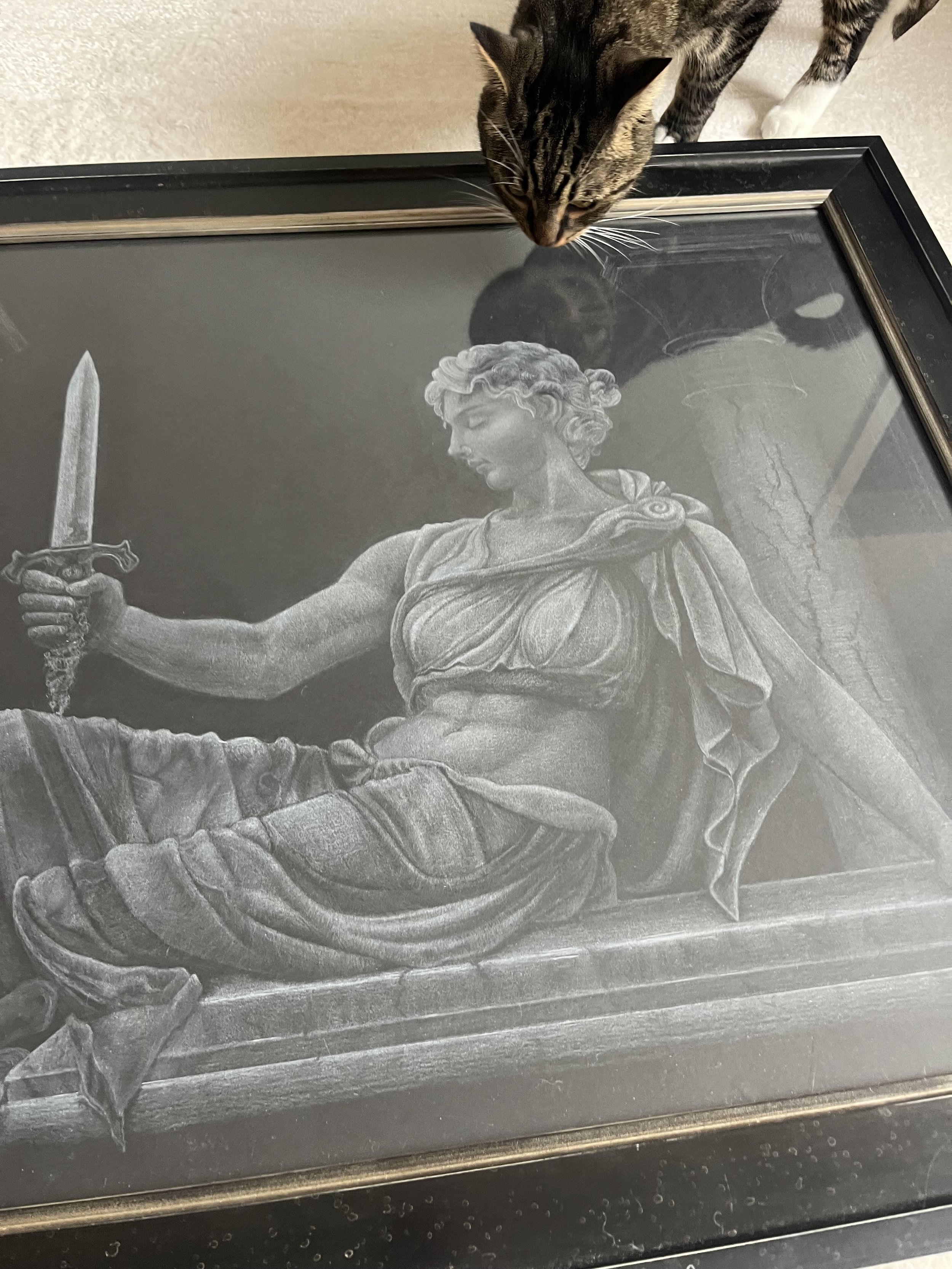 Image 4 of 11
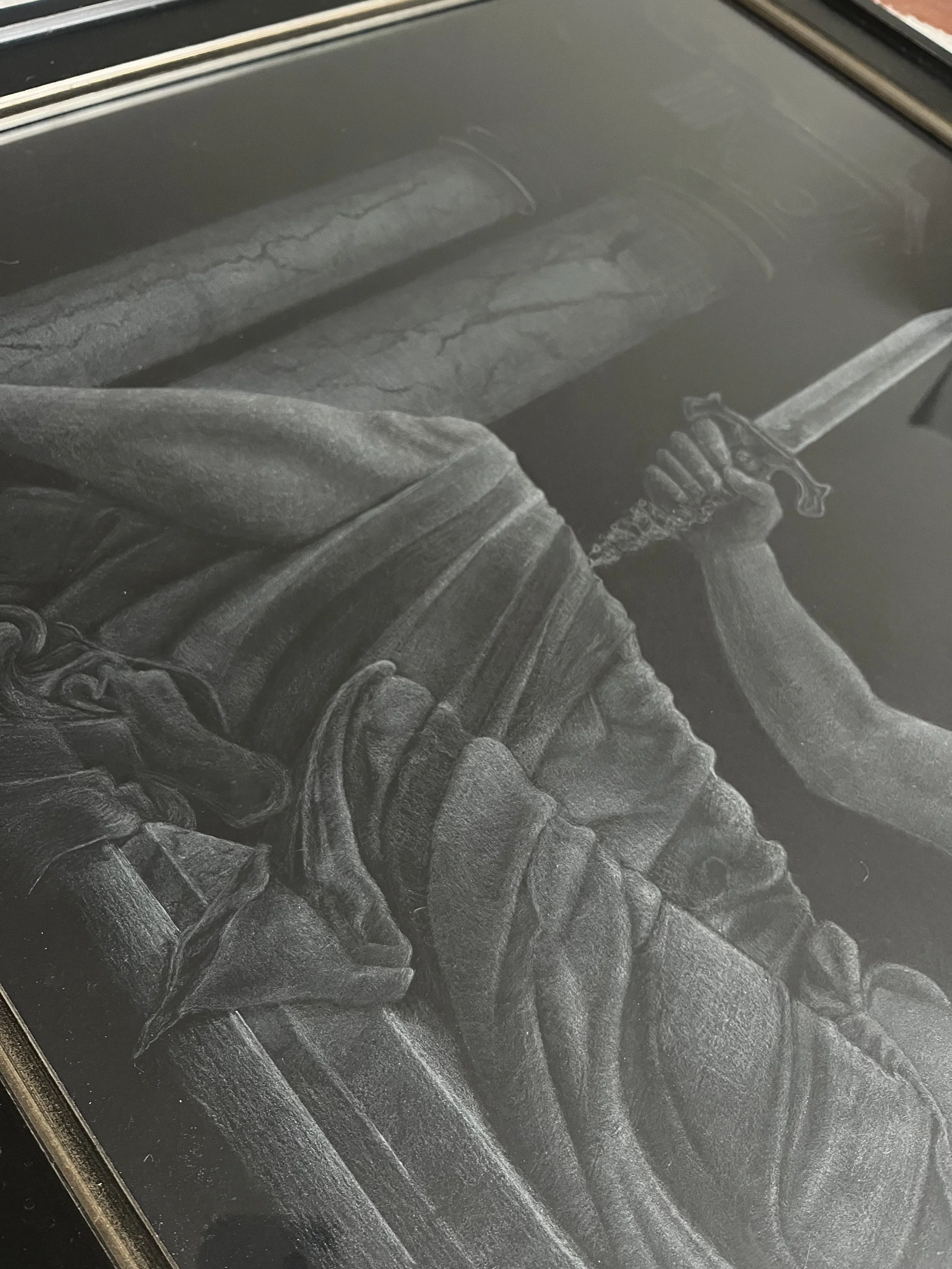 Image 5 of 11
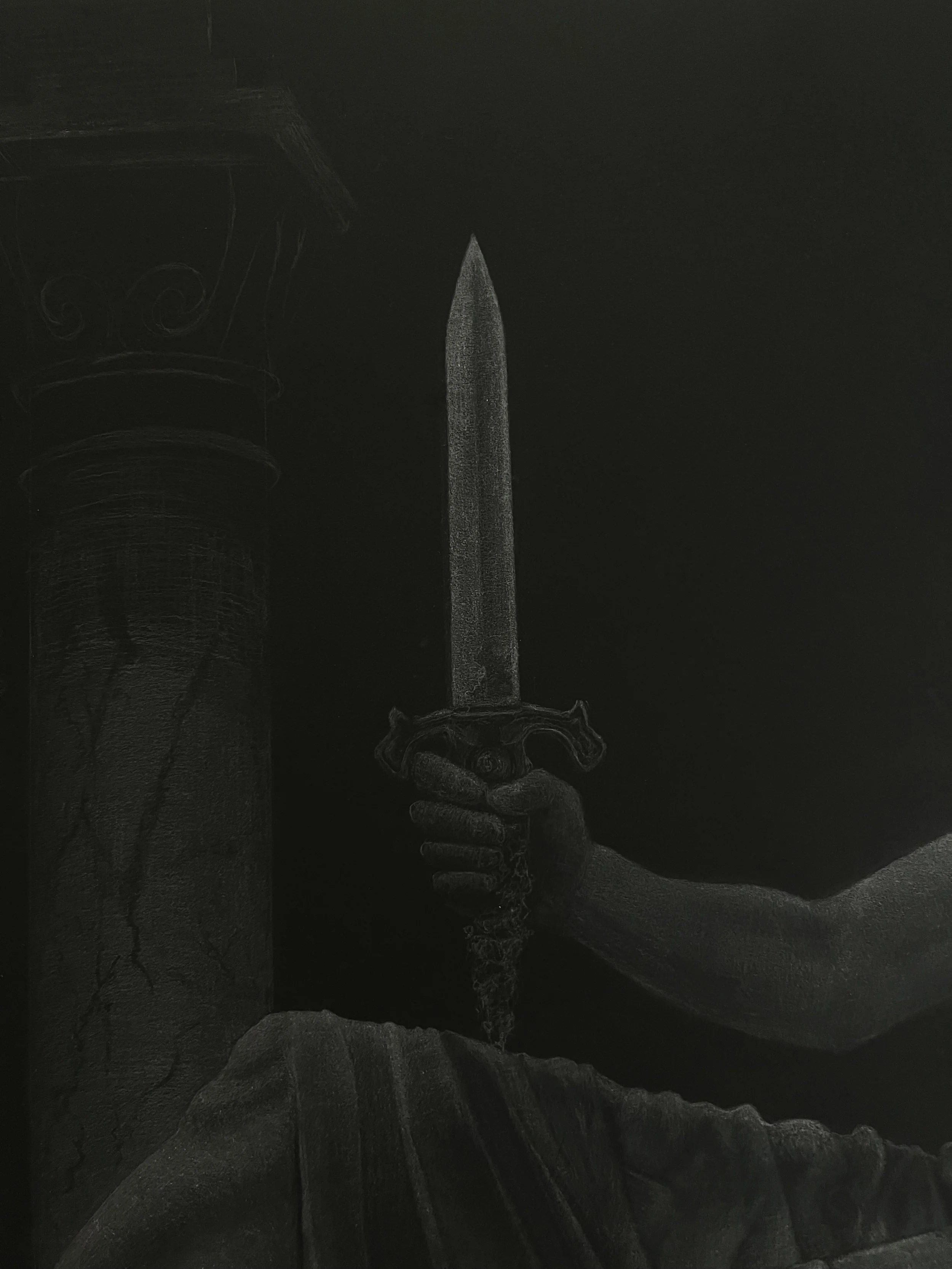 Image 6 of 11
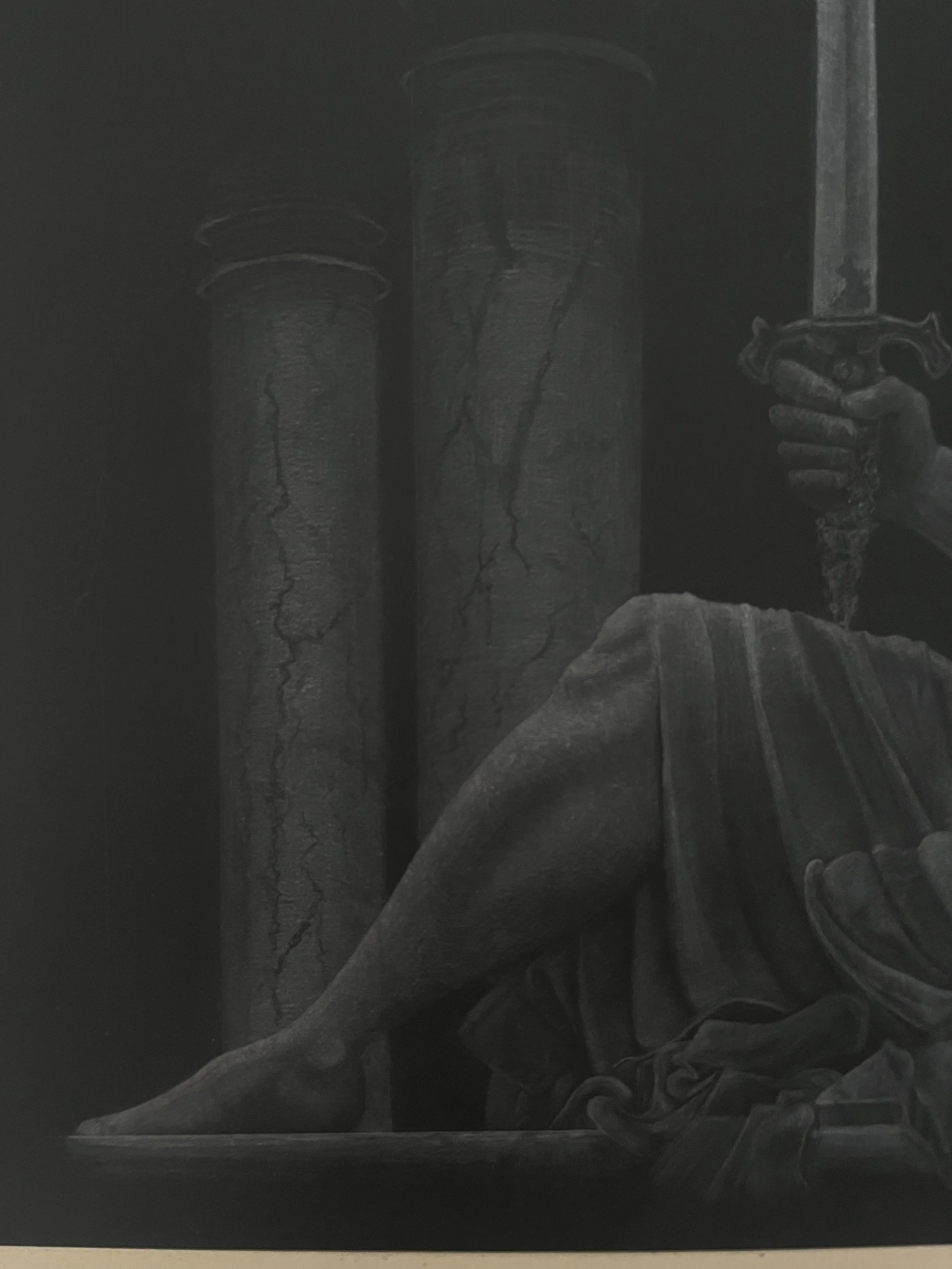 Image 7 of 11
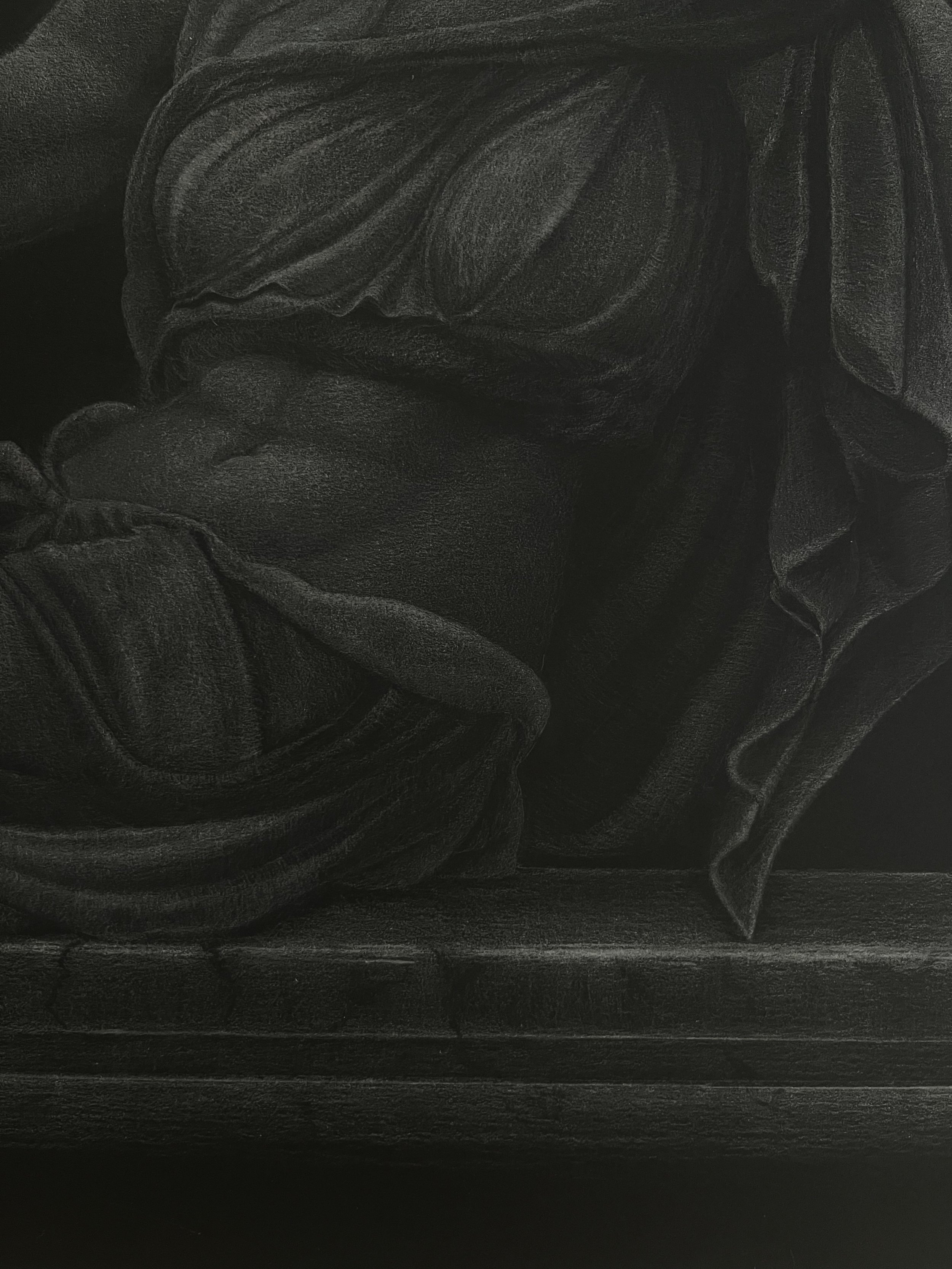 Image 8 of 11
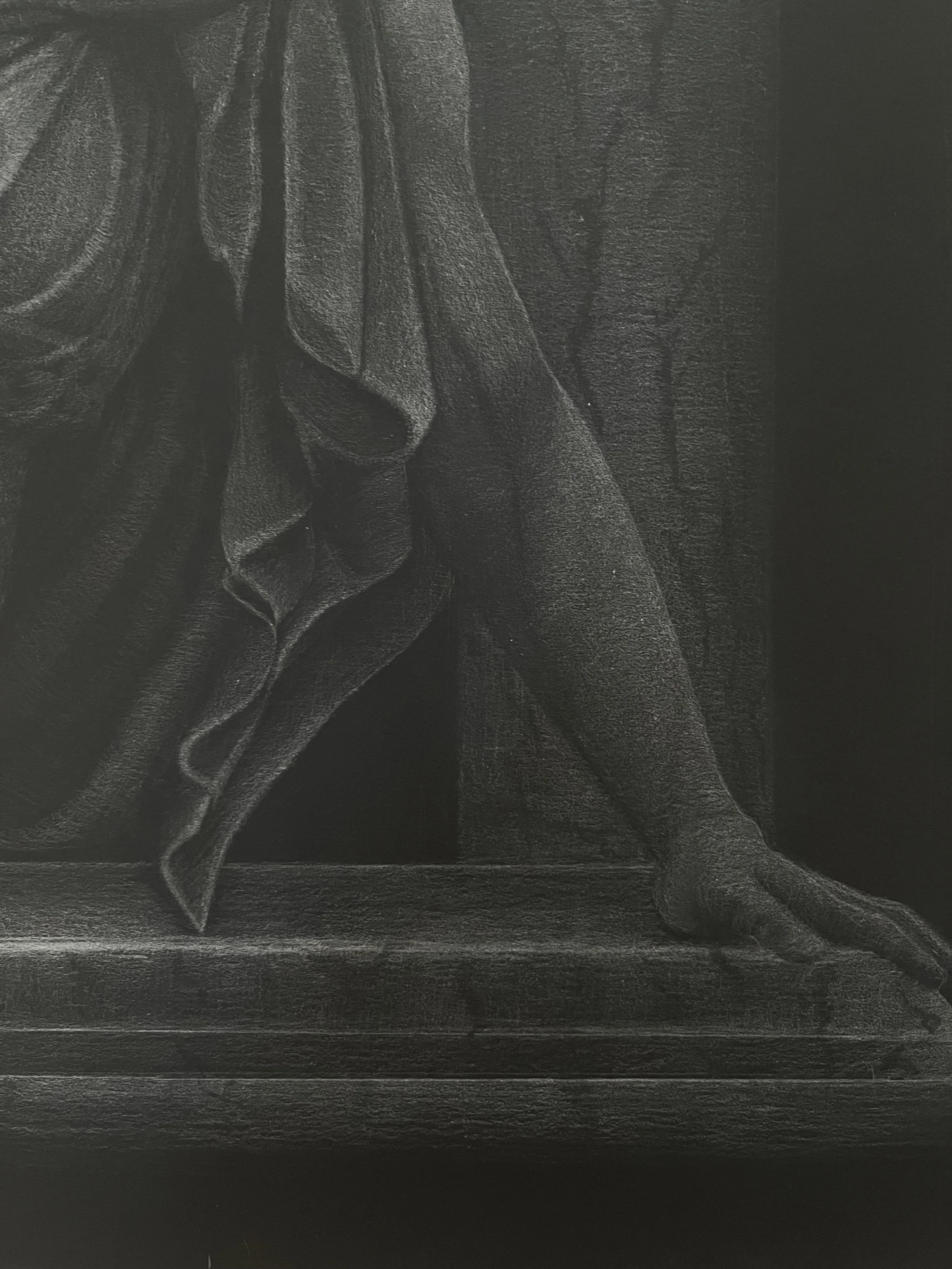 Image 9 of 11
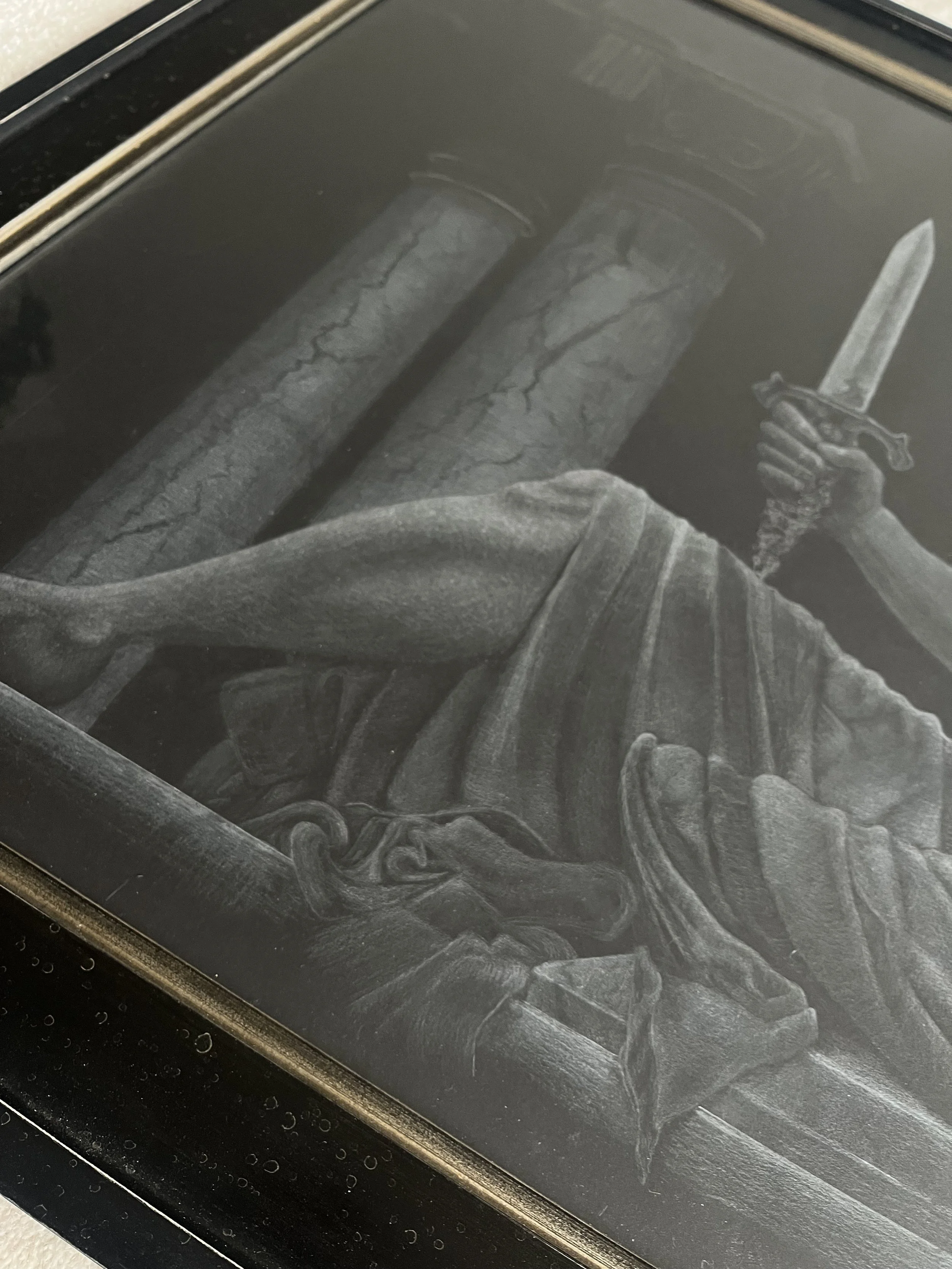 Image 10 of 11
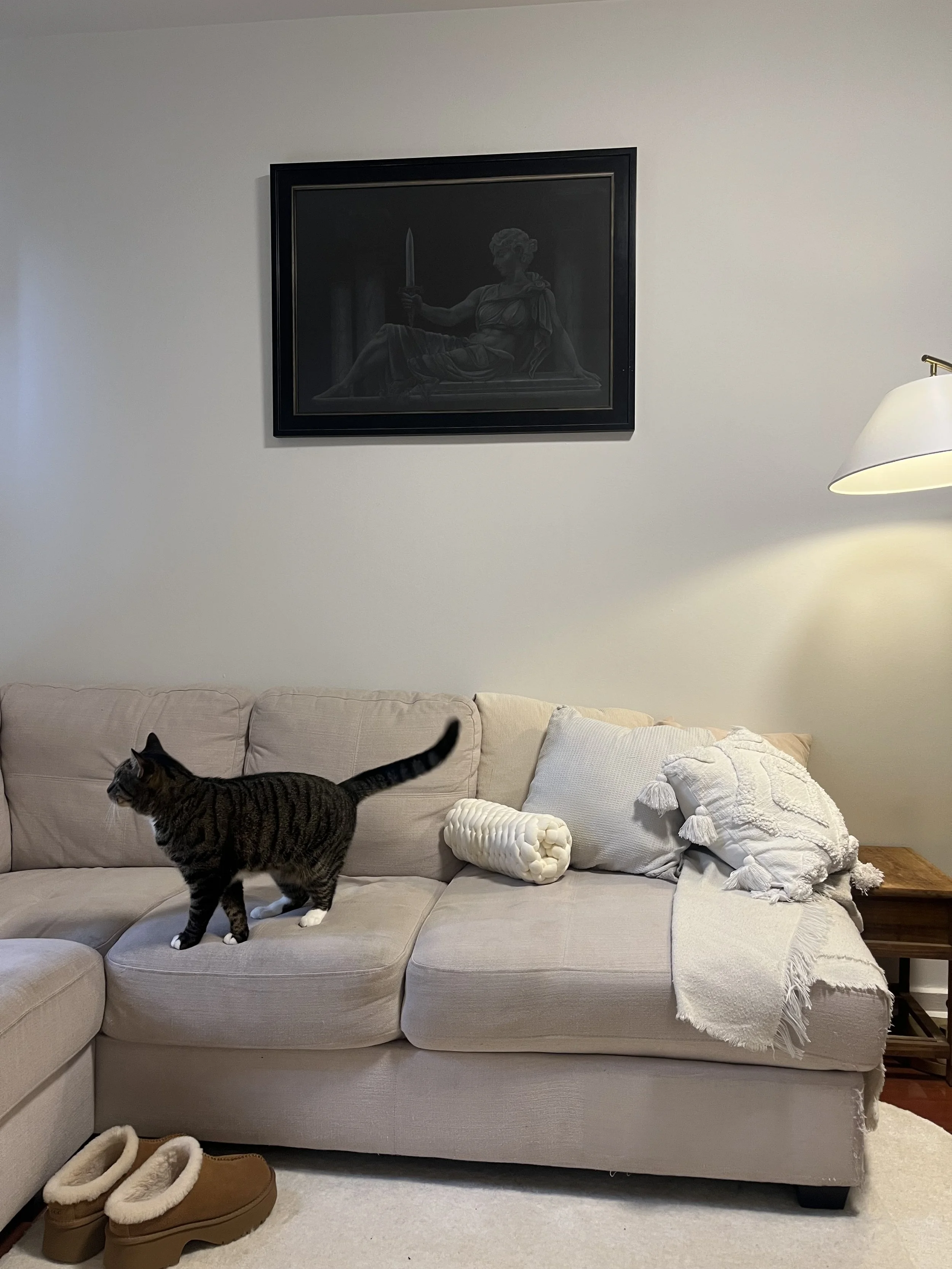 Image 11 of 11
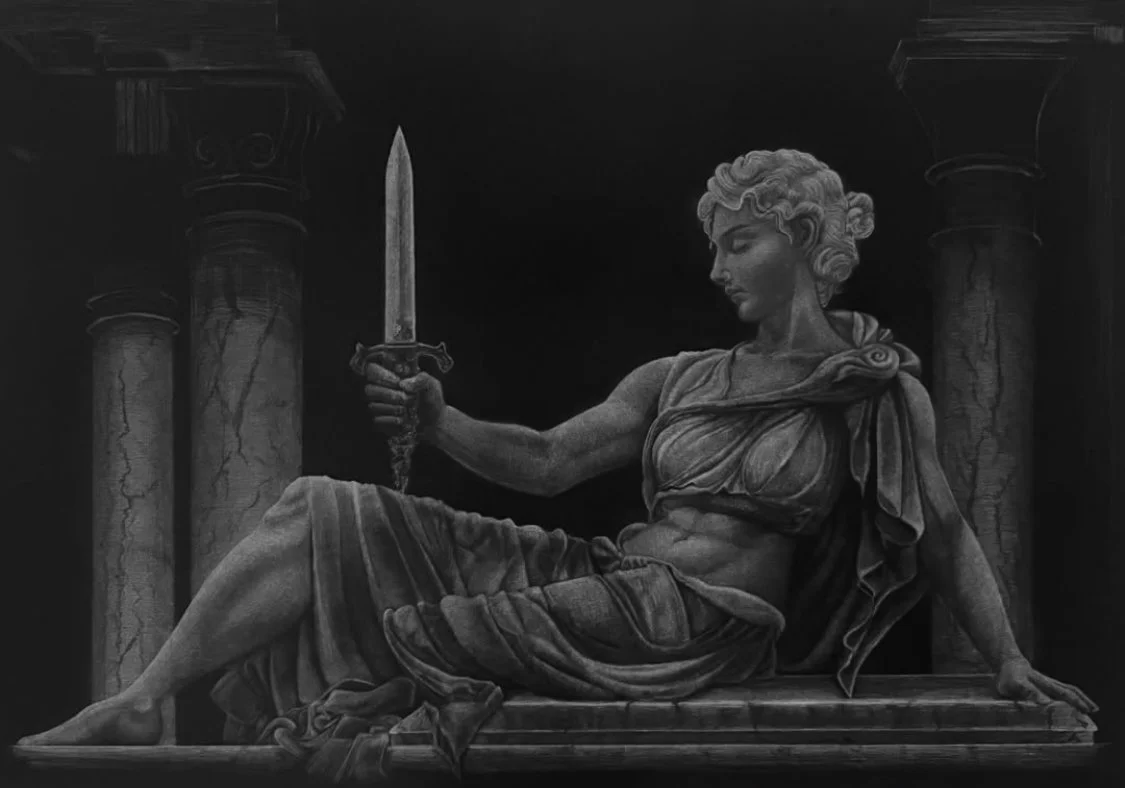
Venus with a Dagger reimagines the Roman goddess not as ornament or seduction, but as quiet authority. Reclining rather than triumphant, Venus holds the dagger upright—present, measured, and restrained. This is not a weapon raised in conquest, but one retained in awareness. A victory already won.
The work speaks to humble triumph: strength that does not perform itself. The body rests, draped in softness, yet nothing here is unguarded. Femininity is rendered as composure rather than fragility—sensual, disciplined, and sovereign. The power in this figure is internal, earned through experience rather than declaration.
The dagger introduces consequence. It acknowledges that beauty, survival, and love are not without cost. Venus does not smile outwardly; if there is a smile, it is inward—private, knowing. This is the aftermath of conflict, where resilience has settled into the body and no longer needs to announce itself.
Set against classical columns and deep shadow, the figure exists beyond spectacle. She does not invite gaze so much as command stillness. In this work, softness and strength are not opposites, but allies—coexisting in a form of beauty that is calm, restrained, and enduring.